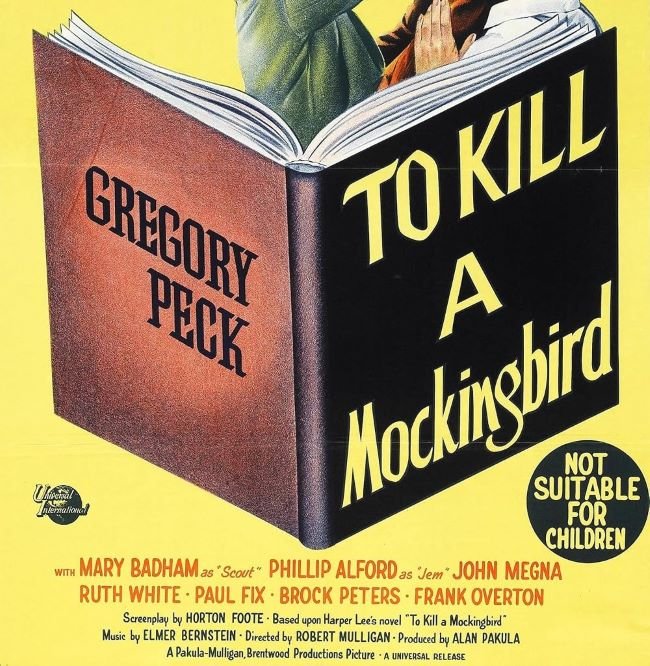
To Kill a Mockingbird font carries the quiet moral authority of Robert Mulligan’s 1962 adaptation with complete typographic integrity — a dignified, hand-crafted serif that feels like it was drawn in ink on good paper by someone who understood the weight of the story they were naming. The title lettering sits in the tradition of mid-century American literary typography: neither showy nor austere, but possessed of that particular Southern unhurriedness that Harper Lee’s novel breathes in every sentence. No official typeface was released, but two alternatives reconstruct that same refined, scholarly serif quality: Alternative 1 and Alternative 2, both drawing on the Garamond and Baskerville tradition.
The typographic restraint of this title is itself a kind of moral statement — in a story about a man who speaks plainly and acts rightly in a world of noise and injustice, the font that names him should not shout. It should simply stand there and be read, which is harder than it sounds. For designers working on American literary heritage projects, civil rights and social justice campaign materials, law firm and judiciary communications, historical drama title design, Southern literary fiction publishing, or any project where the typography needs to convey that what it introduces matters deeply and deserves to be taken seriously without being told so, this is a model of dignified understatement.
You might like these fonts:
Explore these striking typefaces including Metro 2033 Font, Lonely Study Font, and Billion Dreams Font.
Important!
Fonts on this site are property of their creators and may be freeware, open-source, or public domain. License info shown is for guidance only. Check readme files or author websites for details. Missing info doesn’t mean the font is free to use.
Found an error or copyright issue? Please report it.